
Article
Inspection did not make the heat exchanger safe: what the Tesoro Anacortes report said about HTHA
What is high temperature hydrogen attack, and why can inspection miss it? The CSB's 2014 Tesoro Anacortes report: a carbon steel exchanger ruptured from HTHA below the Nelson curve, after reviews used design data. What it says about inspection limits and inherently safer materials.
A carbon steel heat exchanger shell has been in hydrogen service for decades. The design conditions sit below the line on the industry chart, the damage mechanism reviews say the risk is not a concern, and the inspection records are in order. On 2 April 2010, at the Tesoro refinery in Anacortes, Washington, a heat exchanger with that kind of paperwork ruptured from high temperature hydrogen attack (HTHA). Seven Tesoro employees were fatally injured.
The US Chemical Safety and Hazard Investigation Board (CSB) issued its final report on the incident in May 2014. This post is a teardown of what that report found about HTHA: what the damage is, why inspection is a weak defence against it, what the report says about the Nelson curve, and why the CSB pointed to materials of construction rather than more inspection. Every quotation below is from the report, checked against the PDF text, with the report's section and page.
Short answer: High temperature hydrogen attack is, in the CSB's words, "a damage mechanism that results in fissures and cracking and occurs when carbon steel equipment is exposed to hydrogen at high temperatures and pressures." At Anacortes, the CSB estimated that the part of the shell that ruptured had operated below the carbon steel Nelson curve, and found that inspection "is therefore not sufficiently reliable to ensure mechanical integrity and prevent HTHA equipment damage" (Findings 1, 4 and 6, pp. 2-4).
Applies to: Maintenance, inspection and reliability engineers who inspect, assess or specify pressure equipment in hot hydrogen service, such as hydrotreater feed/effluent exchangers. The source is a single US incident investigation; standards it discusses (API RP 941, API RP 581) are described as they stood when the report was written. Last verified: 26 Nov 2026. Author: Muhammed Fahiz
What happened at Anacortes, in the order the CSB recorded it?
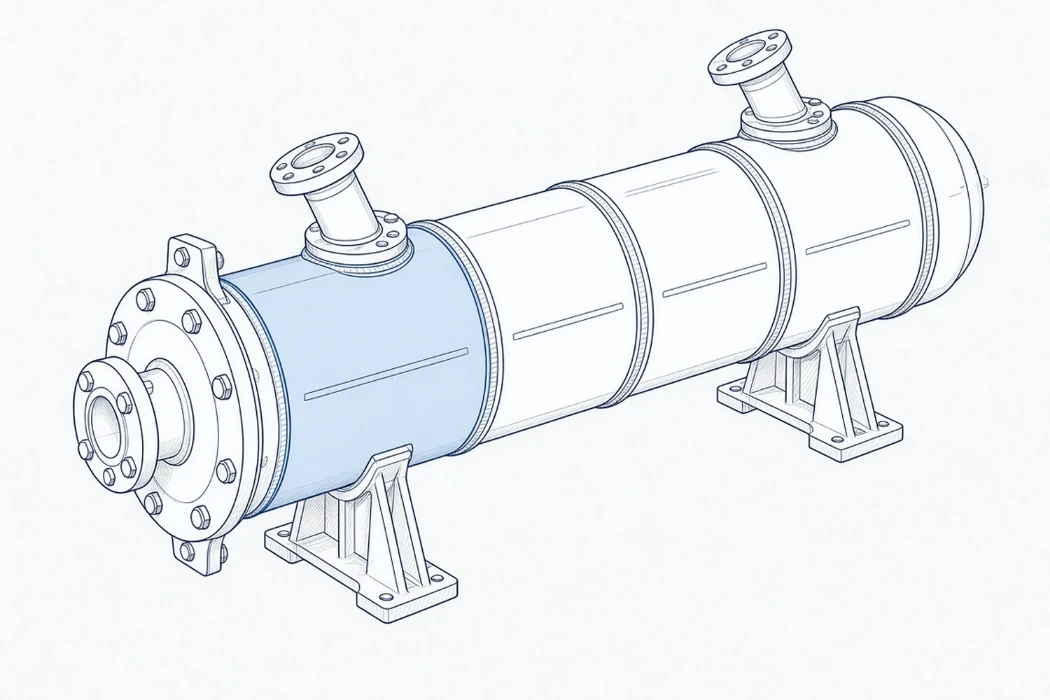
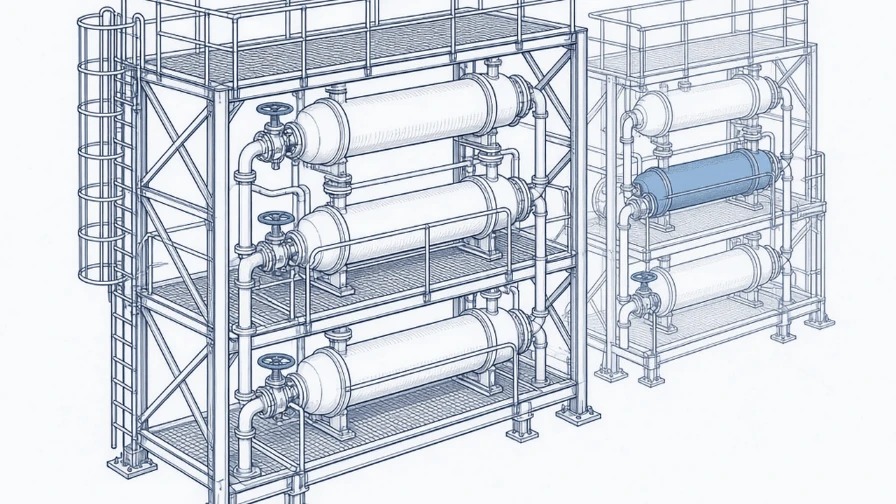
The naphtha hydrotreater (NHT) at Anacortes removed sulfur, nitrogen and oxygen from naphtha by heating it with hydrogen. Before the reactor, the feed was preheated by hot reactor effluent in two parallel banks of three shell-and-tube exchangers, A/B/C and D/E/F. The effluent ran on the shell side (Section 2.3.2, pp. 17-19). The exchangers fouled and had to be cleaned, typically after about six months of continuous operation. One bank was taken out of service while the other kept running (Section 3.1, p. 20).
The sequence below is taken only from the report (Sections 3.1 to 3.3 and 4.3, pp. 20-24 and 43-44).
| When (as the CSB recorded it) | What happened |
|---|---|
| 28 March 2010 | The A/B/C bank was taken offline so its fouled tubes could be cleaned. The D/E/F bank stayed in operation. |
| 31 March 2010 | Cleaning was completed and the equipment was reassembled. |
| Evening of 1 April | Startup of the A/B/C bank began with one inside board operator and one outside operator, as the unit was normally staffed. |
| About 10:30 p.m. | Six more employees (five operators and a supervisor) joined the outside operator at the supervisor's request. The report notes that "The startup procedure did not specify defined roles for these six additional personnel." |
| During startup | Two leaks were reported. Leaks during these startups were frequent and, in the report's words, had become a "normal" part of the startup. |
| 12:30 a.m., 2 April | The E heat exchanger, in the bank that had stayed in service, ruptured. Its shell separated at weld seams, releasing hydrogen and naphtha at more than 500 degrees F, which likely autoignited. |
The report records that all seven people working outside on the startup were badly burned, and that within 22 days all of them had died. The fire burned for more than three hours (Section 1.1, p. 1; Section 3.3, p. 24).
Two points from the technical analysis matter for anyone tempted to blame the startup. The tube outlet temperature rose about 75 degrees F in three minutes just before the rupture, but the CSB found that rise typical of the previous three startups. It concluded that "no equipment mechanical integrity code parameters were exceeded", that the design temperature of 650 degrees F was not exceeded, and that the downstream relief valve was not challenged (Sections 4.3 and 4.3.1, pp. 43-44). The startup stress is described as the most likely explanation of the timing, "but it did not cause the failure" (Section 4.3, p. 43). The metallurgical work by the National Institute of Standards and Technology (NIST), as reported by the CSB, is blunt: "NIST determined that without the HTHA damage, it is unlikely that the E heat exchanger would have ruptured under the conditions that occurred during the April 2010 start-up" (Section 4.2.2, p. 42).
The hazards of the startup itself, the frequent leaks and the number of people in the unit are a separate set of findings about hazardous nonroutine work. The report compares them with the 1999 Tosco Avon fire (Section 5.2.1, p. 58), which we covered in the Tosco Avon teardown. This post stays with the damage mechanism.
What is high temperature hydrogen attack?
The report's definition is short: "HTHA is a damage mechanism that results in fissures and cracking and occurs when carbon steel equipment is exposed to hydrogen at high temperatures and pressures." It adds that "The resulting damage severely degrades the mechanical properties of the steel" (Section 1.1 footnote, p. 1; Finding 1, pp. 2-3).
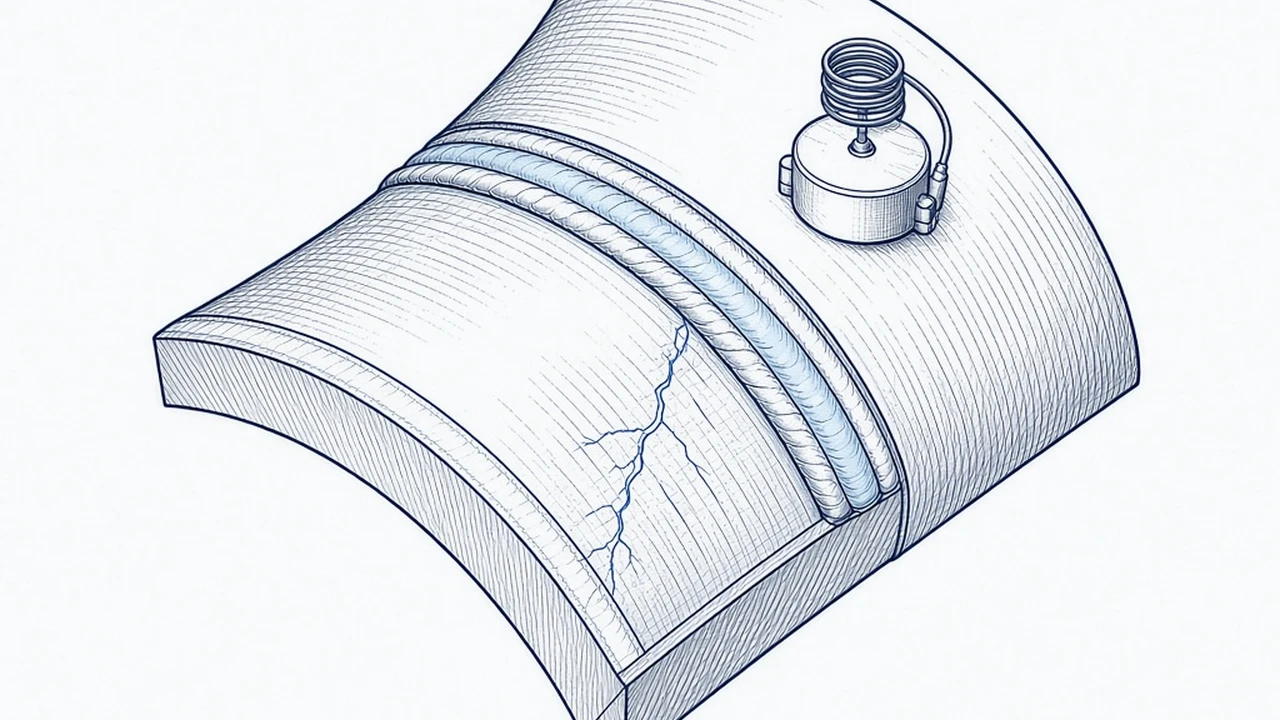
Section 4.1 describes the mechanism (pp. 26-30). Atomic hydrogen diffuses into the steel wall and reacts with carbon in the steel to form methane, which removes carbon from the steel; the report says this is commonly called decarburization. Then: "Methane, a much larger molecule than atomic hydrogen, cannot diffuse out of the steel." The methane collects inside the wall, its pressure rises, and it forms fissures or blisters. Fissures can link into microcracks, and microcracks into larger cracks that can lead to rupture. The report states that this process occurred in the E heat exchanger. (In a footnote it notes that sources differ on whether atomic hydrogen reacts directly with carbon or first recombines into molecular hydrogen.)
Where the damage sat at Anacortes is the part an inspector should read twice.
- Shell material and cladding. The NHT exchangers were built in 1971. The B and E shells were carbon steel (SA-515-70). Only the hottest of the four welded shell sections, "Can 4", was clad on the inside with 1/8 inch of Type 316 stainless steel; Cans 1 to 3 were bare carbon steel (Section 4.2.1, pp. 37-38). The cladding was chosen against sulfidation corrosion, but the report notes it also reduces the effective hydrogen partial pressure on the carbon steel beneath it (p. 38).
- Welds. The shell welds were not post-weld heat treated, and the ASME code did not require it for these exchangers (Sections 4.1.2 and 4.2.1, pp. 33 and 39). The report states that "HTHA was only found in the areas near the welds in both the B and E heat exchangers" (Section 4.1.2, p. 33).
- Base metal. "No HTHA damage is evident in the base metal outside of the heat-affected zone" (Section 4.2.2, p. 41).
- The sister exchanger. The B exchanger did not fail, but it was built from the same materials and ran under the same conditions. The report records one circumferential weld heat-affected-zone crack in B that ran more than 50 percent of the way around the circumference and more than one third of the way through the shell wall (Section 4.2.2, p. 41). NIST's conclusion, as the report gives it, was that both B and E "were severely degraded and had the potential to suffer a catastrophic rupture" (p. 42).
What is the Nelson curve in HTHA?
The Nelson curves are lines on a chart in API Recommended Practice 941, Steels for Hydrogen Service at Elevated Temperatures and Pressures in Petroleum Refineries and Petrochemical Plants. The report explains that they were developed in 1949 by George Nelson from observed industry experience and have been adjusted since (Section 4.1.1, p. 31). Each curve is for one material, plotted against temperature and hydrogen partial pressure. In the report's words: "Industry uses these curves as a line of demarcation to predict HTHA. At temperatures above each curve, HTHA is possible for that material of construction, and at temperatures below the curve, the prediction is that HTHA will not occur for that material" (p. 31). Carbon steel is the lowest curve, the most susceptible material on the chart (p. 31).
The report's view of where the curves come from is not reassuring. It says the Nelson curves "are predicated on past equipment failure incidents and are plotted based on self-reported process conditions that are ill-defined and lack consistency" (Finding 3, p. 3). After Nelson's death, it adds, none of his original data were found (Section 6.1.2, p. 75). It also quotes API's own technical basis document, API TR 941: "The concept of a simple boundary between safe and unsafe operating conditions in hydrogen for common alloys, of the type depicted by the Nelson curves should not be expected" (Finding 21, p. 7; Section 6.1.3, p. 78).
HTHA was found below the carbon steel curve
The B and E exchangers had no temperature instruments of their own (Section 5.3.3.1, p. 68), so the CSB rebuilt their operating conditions with process simulation software. The report is careful that "all model results are estimates of the actual process conditions experienced by the NHT heat exchangers" (Section 4.4.1, p. 46). With that caveat, the results were:
- The stainless-clad Can 4 was estimated to operate at times above the carbon steel Nelson curve. No HTHA was found there, likely because the cladding protected the steel beneath (Finding 5, p. 3; Section 4.4.1.2, p. 50).
- The circumferential weld just downstream of the cladding, the hottest rupture location on E and the location of the major crack on B, was estimated to operate just below the carbon steel curve (Figure 26, p. 48).
- The coldest region of E with HTHA was estimated to have operated up to 120 degrees F below the curve (Section 4.4.1.1, p. 49).
The report's finding is that the ruptured portion "was estimated to have operated below the applicable Nelson curve. This was considered the safe region of operation where HTHA could not occur." It continues: "Therefore, the carbon steel Nelson curve methodology is inaccurate, cannot be depended on to prevent HTHA equipment failures, and cannot be reliably used to predict the occurrence of HTHA equipment damage" (Finding 4, p. 3).
Anacortes was not the only case. The report says the CSB "has learned of at least eight recent refinery incidents where HTHA reportedly occurred below the carbon steel Nelson curve", including reports from ExxonMobil, Valero, Shell and ConocoPhillips, and that API issued an industry alert on HTHA in 2011 (Section 6.1.4.2, p. 79). The ExxonMobil case it describes also involved non-post-weld-heat-treated carbon steel from the early 1970s in a hydrotreating heat exchanger, with cracking next to weld seams (Section 6.1.4.1, p. 79).
Why can HTHA be missed in inspection?
Finding 6 is the paragraph this post is named after. "It is very difficult to inspect for HTHA because the damage might not be detected; it can be microscopic and may be present only in small localized areas of equipment." Next: "In addition, equipment must already be damaged by HTHA for equipment inspection to identify HTHA. Successful identification of HTHA is highly dependent on the specific techniques employed and the skill of the inspector, and there are few inspectors who have this expertise. Inspection is therefore not sufficiently reliable to ensure mechanical integrity and prevent HTHA equipment damage" (p. 4).
Section 4.1.4 adds API RP 941's own description of the problem, which the report quotes: "High temperature hydrogen attack is a difficult inspection challenge. The early stages of attack with fissures, or even small cracks, can be difficult to detect. The advanced stage of attack with significant cracking is much easier to detect, but at that point there is already a higher likelihood of equipment failure" (p. 36). The CSB's own words follow: "Inspection results can be unreliable and misleading," and "Inspection thus ranks very low on the hierarchy of controls" (p. 36).
Appendix E, on inspection techniques, makes the same point from the method side. It describes the Advanced Ultrasonic Backscatter Technique (AUBT) as one that "is currently the best NDE method for detecting and quantifying damage from HTHA", says it requires a very high level of expertise, and states: "There is no general certification of inspector competence in the application of HTHA detection techniques." Of the velocity-ratio method it says tests have shown it "is only effective at high levels of HTHA and is limited to the base metal" (p. 141). At Anacortes, as noted above, the damage was in the heat-affected zones next to the welds; the report does not connect these two points itself.
The report does not suggest dropping inspection. Its point is about what inspection is being asked to do. In Finding 7, inspections and post-weld heat treating "rely on procedures and human implementation, which are low on the hierarchy of controls" and are therefore "weaker safeguards to prevent HTHA failures than the use of materials that are less susceptible to HTHA damage" (p. 4).
Why were the B and E exchangers never inspected for HTHA?
The report states plainly that "the B and E heat exchangers were never inspected for HTHA and more HTHA-resistant materials were never considered until after the April 2010 incident" (Section 5.3.3, p. 68). The reasons it gives are records and data problems, not a missing inspector.
Design data stood in for operating data. Carbon steel was selected in the first place "because the design temperatures were below the carbon steel Nelson curve" (Section 4.2.1, p. 37). For the next decades, the damage mechanism hazard reviews (DMHRs, called corrosion reviews at the refinery) in 1990, 1999, 2003 and 2008 kept relying on design numbers. The report's verdict: "None of these DMHRs conducted in the 20 years before the incident identified the potential danger of HTHA in the B and E heat exchangers because they primarily relied on design data instead of measured process conditions" (p. 68). The design point used for the HTHA evaluation, 504 degrees F and 291 psia hydrogen partial pressure, "did not represent the entire range of heat exchanger operating conditions" (Figure 25 caption, p. 47). The exchangers fouled, and the report notes the operating temperature "increased significantly from heat exchanger fouling" (Section 5.3.3.1, p. 68).
There was nothing to measure with. "Although some temperature and pressure measurements were taken surrounding the NHT heat exchanger banks, no temperature measurements were made between the heat exchangers. Thus, Tesoro did not know the operating temperature of the process fluid entering and exiting the B and E heat exchangers" (Section 4.4, p. 46). The report mentions a single external surface temperature reading of 455 degrees F, taken in October 1998 on the inlet to either B or E (p. 46).
The inspection trigger needed the data it was meant to produce. The refinery's HTHA inspection procedure required monitoring records, and inspection, for equipment operating within 25 degrees F or 25 psia of the Nelson curve (Finding 14 footnote, p. 6; Section 5.3.3.1, p. 68). The CSB's comment: "The procedure did not clarify how to make such a determination (which would necessitate accurate measurement capability) without already having an accurate measurement" (p. 68). The report adds that operation near or above the curve in Can 4 "should have triggered an inspection for HTHA by Tesoro, but the company never performed such an inspection" (Section 4.4.1.2, p. 50).
The cladding was recorded wrongly. "Each damage mechanism review documents that the B and E heat exchangers had a protective 316 stainless steel cladding covering the carbon steel wall." In fact, only Can 4 was clad: "The other three sections of the B and E heat exchanger shell walls were carbon steel without any protective cladding" (Section 5.3.3, p. 65). The CSB's summary table lists the 2008 review's conclusion as "HTHA not a concern since operating conditions are below the Nelson curve" (Figure 31, p. 67).
The reviews knew better on paper. The 1999 and 2003 reviews themselves stated that "Off-normal conditions must be considered in addition to normal operating conditions" (p. 65). None of them asked for a process simulation or for instruments to measure the full range (p. 65).
The hazard analysis assumed inspection worked. Process hazard analysis (PHA) teams used a standing assumption that, for pipes and vessels in the corrosion inspection program, "Leaks or loss of containment due to corrosion of pipes and vessels is not credible for pipes and vessels included in these programs" (Section 5.3.4.1, p. 71). The 1996 PHA listed the inspection program as a safeguard against HTHA. The report's reply: "However, the B and E heat exchangers were never inspected for potential HTHA damage" (p. 72). The 2010 PHA, which evaluated the NHT exchangers 38 days before the rupture, did not identify the potential hazard of B or E shell failure from HTHA (p. 72).
An external audit looked at the same vessel. In a state audit under OSHA's refinery National Emphasis Program, completed in 2009, the E exchanger was one of nine pressure vessels selected at random. The audit recorded: "Inspection records for all nine vessels were examined and found to be in order. No citable deficiencies found." The CSB notes that the question sets used made no mention of HTHA, corrosion studies or failure mechanisms (Section 7.3.3.1, p. 96).
The CSB ties this together as a culture finding: "The refinery process safety culture required proof of danger rather than proof of effective safety implementation" (Finding 19, p. 7). It quotes the Hydrogen Attack Project, a Materials Properties Council and API report, on the data problem: "The only really reliable way to get an equipment exposure temperature is to properly measure the actual temperature of the component" (Section 6.1.3, p. 76).
What did the CSB recommend instead of more inspection?
Finding 8 is short: "Inherently safer design is a better approach to prevent HTHA." It continues that API has identified high chromium steels significantly more resistant to HTHA than carbon steel, and "The B and E heat exchangers were not constructed from these inherently safer materials" (p. 4).
Section 4.1.3 explains the reasoning through the hierarchy of controls, on which the report places a material upgrade high and post-weld heat treating and inspection low: "Holding other variables constant, upgrading the material of construction can eliminate the potential for HTHA" (p. 35). The report quotes API RP 571, Damage Mechanisms Affecting Fixed Equipment in the Refining Industry: "300 Series SS, as well as 5Cr, 9Cr and 12Cr alloys, are not susceptible to HTHA at conditions normally seen in refinery units" (Section 4.1.4, p. 36). On timing, it says: "It is simpler, less expensive, and more effective to introduce inherently safer features during the design process of a facility rather than after the process is already operating," and that "Process upgrades, rebuilds, and repairs offer additional opportunities to implement inherently safer design concepts" (p. 34).
The report sets Anacortes next to the 2012 Chevron Richmond pipe rupture from sulfidation corrosion and draws the same lesson from both: "Although inspection programs are needed they are very low on the hierarchy of controls, and in both cases the inspection strategies failed to prevent a major process safety incident" (Section 7.7.1, p. 103).
Its recommendation to the American Petroleum Institute (2010-08-I-WA-R10, p. 119) asked API to revise RP 941 to set minimum "shall" requirements, to require inherently safer materials to the greatest extent feasible, to "Require verification of actual operating conditions to confirm that material of construction selection prevents HTHA equipment failure", and to prohibit carbon steel in processes operating above 400 degrees F and above 50 psia hydrogen partial pressure. A parallel recommendation (R11) asked for similar changes to API RP 581, the risk-based inspection document, after the CSB found that RP 581 with Tesoro's design conditions gave the B and E exchangers a "Low Susceptibility" result (Finding 25, p. 8; Section 6.2, p. 82).
After the incident, Tesoro installed new NHT exchangers with upgraded materials, a single bank (so the whole unit is shut down for cleaning), advanced process control to limit fouling, and more instrumentation on each exchanger (Section 4.4.1.3, p. 50). The report adds, in a footnote, that portions of the new exchangers that use carbon steel are still designed to operate above 400 degrees F (p. 50).
What can an engineer who inspects or specifies equipment take from the report?
The list below is our reading of the report's findings, framed as questions. It is not a checklist from the CSB, and it is not a substitute for a damage mechanism review by a qualified materials engineer.
- Are the HTHA screening numbers measured or design values? At Anacortes, the reviews relied on design data or engineering estimates, and the CSB found these did not represent the operating range, especially as the exchangers fouled (pp. 47, 65-68).
- Is there an instrument that can tell you where this exchanger operates? In a multi-exchanger train, the report shows that inlet and outlet readings for the bank did not give the temperature of each exchanger (Section 4.4, p. 46).
- Does the record of the shell match the shell? Each of the reviews recorded full cladding on shells that were clad in one section out of four (p. 65). The fabrication layout and the post-weld heat treatment status of the welds both mattered (pp. 37-39).
- What does your inspection procedure need before it triggers? A trigger that depends on knowing the operating point is not a trigger if nobody measures the operating point (p. 68).
- What would a clean inspection report actually prove? The report says equipment "must already be damaged by HTHA for equipment inspection to identify HTHA" (p. 4), that results "can be unreliable and misleading" (p. 36), and that the E exchanger's records were "found to be in order" a year before it ruptured (p. 96).
- When the exchanger is rebuilt or replaced, is material upgrade on the table? The report names upgrades, rebuilds and repairs as opportunities for inherently safer design (p. 34).
What this report doesn't tell you
- The CSB states that its operating conditions for B and E are model estimates, built with assumptions such as fouling distribution because process and fouling data were lacking, and limited to 2007-2010 (Finding 4 footnote, p. 3). The "below the Nelson curve" finding rests on that modelling.
- The report describes API RP 941 and API RP 581 as they stood in 2014. API standards are revised over time. We have not checked the current editions or how API responded to recommendations R10 and R11, so this post does not say what today's editions require. Check the current edition before applying anything above.
- We read the main report and its Appendix E. The BETA Laboratory reports, the NIST metallurgical review and the Spectrum inspection reports are separate appendices on the CSB website; we report their findings only as the main report summarises them.
- The report also covers process safety culture, hazardous nonroutine work, and regulatory oversight in Washington State in detail. Those sections are not summarised here beyond what touches HTHA.
- This is a US refinery and US regulation. The physics of HTHA does not depend on jurisdiction, but the regulatory findings do.
Where does HangerSearch fit?
Read the Anacortes report from a records angle and the same gap keeps appearing: reviews that carried forward design numbers, a cladding description that did not match the fabrication layout, a trigger that waited for data nobody collected. HangerSearch does not assess damage mechanisms or replace a materials engineer. It searches your team's finalized inspection and service reports where they already sit and cites the page each answer comes from, so the fabrication notes, past findings and readings already on file for an asset can be found when the next review is done. See how we handle your reports.
Book a 20-minute demo: hangersearch.com
FAQ
What is high temperature hydrogen attack? The CSB report defines HTHA as "a damage mechanism that results in fissures and cracking and occurs when carbon steel equipment is exposed to hydrogen at high temperatures and pressures." Hydrogen diffuses into the steel and reacts with its carbon to form methane, which cannot diffuse out. The trapped methane forms fissures and blisters that can link into cracks and lead to rupture, as the CSB found in the Tesoro E heat exchanger.
Why can HTHA be missed in inspection? The report says the damage "can be microscopic and may be present only in small localized areas of equipment", that equipment must already be damaged before inspection can find HTHA, and that success depends on the technique and on the inspector's skill, with few inspectors having that expertise. It concludes that inspection is "not sufficiently reliable" to prevent HTHA equipment damage.
What is the Nelson curve in HTHA? Nelson curves, in API RP 941, plot temperature against hydrogen partial pressure for each material. Above a material's curve HTHA is considered possible; below it, the prediction is that HTHA will not occur. The CSB found HTHA in Tesoro's carbon steel exchangers at conditions it estimated were below the carbon steel curve, and concluded that this curve "cannot be depended on to prevent HTHA equipment failures".
What caused the Tesoro Anacortes heat exchanger rupture? The CSB found that the carbon steel E heat exchanger ruptured because it had been severely weakened by HTHA, with damage concentrated in the heat-affected zones of welds that were not post-weld heat treated. A temperature rise during the startup of the neighbouring bank likely explains the timing, but the report says it did not cause the failure, and no mechanical integrity code parameters were exceeded.
What did the CSB recommend to prevent HTHA? Inherently safer materials rather than reliance on inspection. It asked API to revise RP 941 with minimum requirements, to require inherently safer materials to the greatest extent feasible, to require verification of actual operating conditions, and to prohibit carbon steel above 400 degrees F and above 50 psia hydrogen partial pressure.
Sources
- US Chemical Safety and Hazard Investigation Board (CSB), Investigation Report: Catastrophic Rupture of Heat Exchanger (Seven Fatalities), Tesoro Anacortes Refinery, Anacortes, Washington, April 2, 2010, Report 2010-08-I-WA, May 2014: https://www.csb.gov/assets/1/7/tesoro_anacortes_2014-may-01.pdf. PDF downloaded on 26 Nov 2026 (160 pages); text extracted with pdftotext and read for the executive summary and key findings, Sections 2 to 4, Sections 5.2.1 and 5.3.3 to 5.4, Section 6, Sections 7.3.3.1 and 7.7.1, the API and Tesoro recommendations in Section 8, and Appendix E. Page numbers are the report's printed page numbers (PDF page = printed page + 12). Quotations attributed to API RP 941, API RP 571, API TR 941 and the Hydrogen Attack Project are as quoted in the CSB report; those documents were not read separately.
Related
- The naphtha was still in the line: what the Tosco Avon investigation found about nonroutine maintenance
- A rupture disk was replaced, the isolation valve stayed closed: what the Goodyear case study recorded
- "More overhauls prevent failures": what the original RCM study actually said
- How HangerSearch handles your data