
Article
A rupture disk was replaced, the isolation valve stayed closed: what the Goodyear case study recorded
On 10 June 2008 a rupture disk was replaced on an ammonia-cooled heat exchanger at Goodyear in Houston, and the relief isolation valve stayed closed. What the CSB case study recorded about the work order and the handwritten isolation note, and the OSHA lockout tagout steps in order.
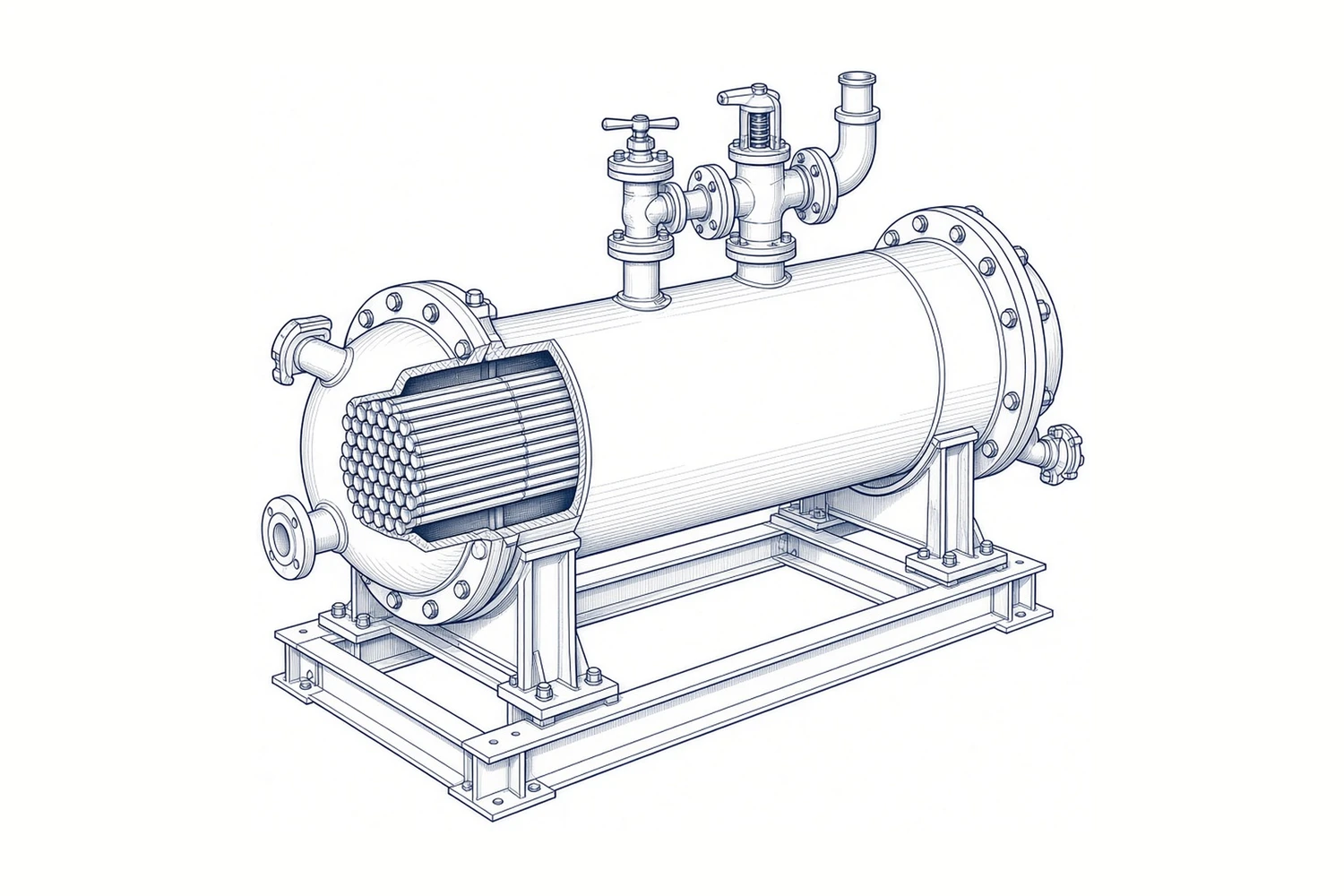
On 10 June 2008, operators at The Goodyear Tire and Rubber Company plant in Houston, Texas, closed an isolation valve between the ammonia side of a heat exchanger and its relief valve so that a burst rupture disk could be replaced. Maintenance workers replaced the disk that day. The isolation valve was not reopened. The next morning, during a separate job to steam-clean process piping, an operator closed a block valve that isolated the ammonia pressure control valve, the remaining path that could have relieved pressure. Steam heated the ammonia in the shell. The shell ruptured at about 7:30 a.m. The US Chemical Safety Board (CSB) case study records that one worker was killed and six were injured.
This post is a teardown of what that case study recorded about the isolation and the close-out. It also sets out the lockout tagout procedure in the US Occupational Safety and Health Administration (OSHA) standard, including the difference between lockout and tagout, because those are the questions people type when they look up this kind of job. The OSHA steps are a US general industry rule. The close-out lesson from the case study does not depend on which rulebook you work under.
Short answer: On 10 June 2008, workers at Goodyear's Houston plant replaced a burst rupture disk on an ammonia-cooled heat exchanger and left the relief isolation valve closed. The next morning a separate steam-cleaning task blocked the remaining vent path, and the shell ruptured. Goodyear could not produce a signed work-order close-out, and a handwritten note was the isolation-status record.
Applies to: Shop-floor technicians and process operators who isolate relief paths or other energy-isolating valves during maintenance. The incident is a US process plant; the lockout tagout steps quoted below are from OSHA's US general industry standard, 29 CFR 1910.147. Last verified: 20 Nov 2026. Author: Muhammed Fahiz
What happened, in the order the CSB recorded it?
The plant makes synthetic rubber. Pressurized anhydrous ammonia in a heat-exchanger shell cools process chemicals that flow through tubes inside the shell. A pressure control valve in the vapor return line held the ammonia at 150 psig. Over-pressure protection was a rupture disk in series with a pressure relief valve, both set at 300 psig. An isolation valve between the heat exchanger and the rupture disk let workers isolate the disk and relief valve for maintenance. While that isolation valve was closed, the CSB notes, the heat exchanger was still protected by the automatic pressure control valve.
The sequence below is taken only from the CSB case study (report 2008-06-I-TX, January 2011). Times are as the report gives them.
| When (as the CSB recorded it) | What happened |
|---|---|
| 10 June 2008 | Operators closed the isolation valve between the heat exchanger shell (ammonia cooling side) and the relief valve, to replace a burst rupture disk under the relief valve. |
| By about 4:30 p.m. on 10 June | Maintenance workers had replaced the rupture disk. The isolation valve was not reopened. |
| Night shift on 10 June, and day shift on 11 June | No further work was done on the rupture disk or the relief line. The isolation valve stayed closed. |
| Morning of 11 June | An operator closed a block valve isolating the ammonia pressure control valve from the heat exchanger, then connected a steam line to the process line to clean the piping. |
| About 7:30 a.m. on 11 June | Steam flowing through the tubes heated the liquid ammonia in the shell. The closed isolation valve and the closed block valve prevented venting through either the rupture disk and relief valve or the pressure control valve. The shell ruptured. |
The case study also describes gaps in emergency accounting after the rupture. That is a separate lesson in the report, and it is not the subject of this post.
Where did the isolation and close-out break down?
The CSB found evidence of breakdowns in both the work order and lockout/tagout programs that contributed to the incident.
Operators were trained to use the work order system, including signature verification before the work started and after the job was completed, and to use lockout/tagout procedures for equipment undergoing maintenance. Goodyear's work order system required the process operator to sign off when the repairs were completed. The CSB writes that whether this occurred during the 10 June day shift is unclear, and that Goodyear was unable to produce a signed copy of the work order. Operators also reported that maintenance personnel did not always obtain production operators' signatures as required, and that work order documentation was not kept at production control stations.
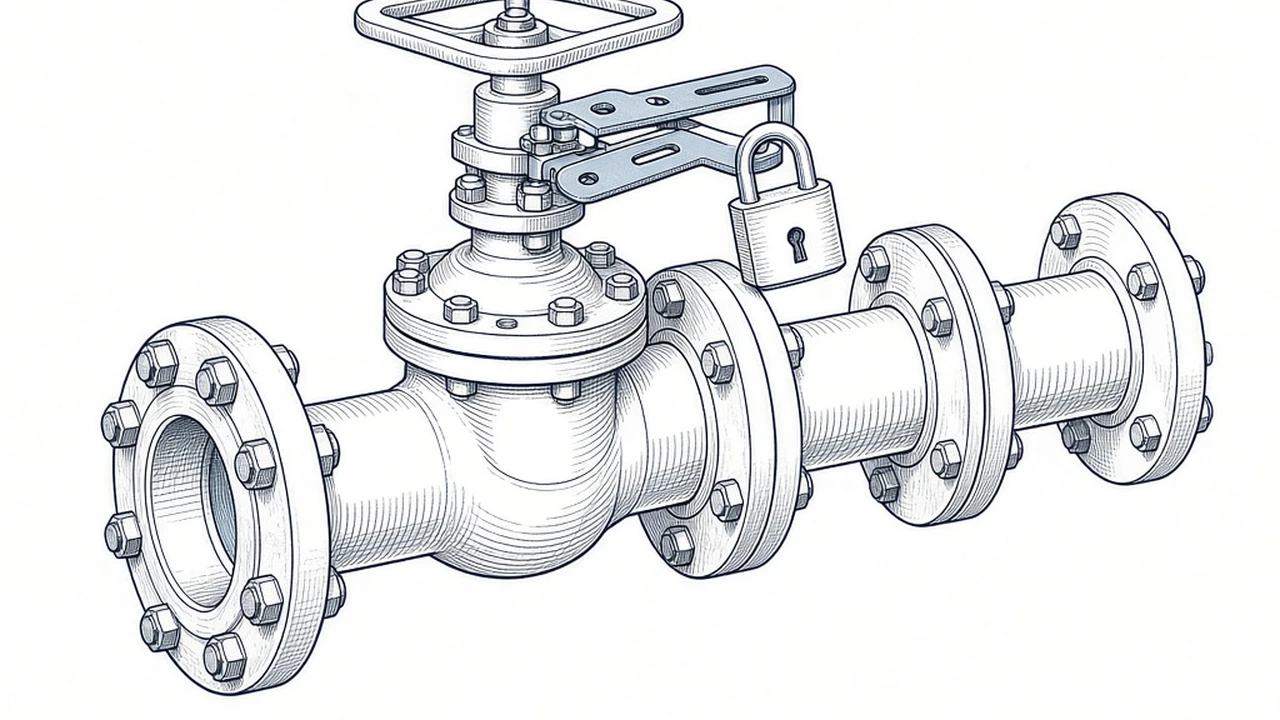
On the isolation itself, the CSB is direct: "Operators used the lockout/tagout procedures to manage the work on the heat exchanger rupture disk, but did not clearly document the progress and status of the maintenance. Information that the isolation valve on the safety relief vent remained in the closed position and locked out was limited to a handwritten note."
So the disk had been replaced, the relief path was still isolated and locked out, and the only recorded status of that closed valve was a handwritten note. The next morning, a separate task closed the other remaining over-pressure path. The CSB describes what that did: closing the block valve between the heat exchanger and the automatic pressure control valve "isolated the ammonia side of the heat exchanger from all means of over-pressure protection."
The report also records a gap in the plant's own maintenance procedures. The CSB states that the ASME Boiler and Pressure Vessel Code, Section VIII, required by OSHA's Process Safety Management standard (29 CFR 1910.119) at this plant, requires that when a pressure vessel relief device is temporarily blocked and there is a possibility of pressurization above the design limit, a worker capable of releasing the pressure must continuously monitor the vessel. We have not opened the ASME Code itself; that requirement is given here as the CSB stated it. The CSB then says Goodyear's maintenance procedures did not address over-pressurization by the ammonia when the relief line was blocked, and did not require staff to post a worker at the vessel to open the isolation valve if the pressure rose above the operating limit.
In its lessons on maintenance completion, the CSB writes that communicating plant conditions between maintenance and operations is critical, and that "Good practice includes formal written turnover documents that inform maintenance personnel when a process is ready for maintenance and operations personnel when maintenance is completed and the process can be safely restored to operation." On isolating pressure vessels, it says workers should continuously monitor an isolated pressure relief system throughout a repair "and reopen blocked valves immediately after the work is completed."
What is lockout tagout?
Lockout/tagout is the US OSHA name for the practices that keep a machine or a line from being re-energized, or from releasing stored energy, while someone is working on it. OSHA's booklet Control of Hazardous Energy: Lockout/Tagout (OSHA 3120, 2002, Revised) defines it this way: "Lockout/tagout" refers to specific practices and procedures to safeguard employees from the unexpected energization or startup of machinery and equipment, or the release of hazardous energy during service or maintenance activities.
The legal standard behind that booklet is 29 CFR 1910.147, "The control of hazardous energy (lockout/tagout)." It covers servicing and maintenance of machines and equipment in which unexpected energization, start-up, or release of stored energy could cause injury. It is a US general industry standard. It does not, by its own scope, cover construction or agriculture employment, and it has other listed exclusions. A plant outside the United States will be under different rules. The definitions and steps below are what this OSHA standard says, not a universal procedure.
The standard's definition of an energy isolating device is broader than an electrical disconnect. It is "a mechanical device that physically prevents the transmission or release of energy," and the list of examples includes a line valve and a block. Push buttons, selector switches and other control-circuit devices are not energy isolating devices. A line valve is in that list. The isolation valve on the Goodyear relief line was a valve used to isolate the relief path.
What is the difference between lockout and tagout?
Lockout holds the isolating device so it cannot be operated. Tagout warns people not to operate it. That difference is in the standard's own definitions, at 29 CFR 1910.147(b):
| Lockout | Tagout | |
|---|---|---|
| What the act is | "The placement of a lockout device on an energy isolating device, in accordance with an established procedure, ensuring that the energy isolating device and the equipment being controlled cannot be operated until the lockout device is removed." | "The placement of a tagout device on an energy isolating device, in accordance with an established procedure, to indicate that the energy isolating device and the equipment being controlled may not be operated until the tagout device is removed." |
| What the device is | "A device that utilizes a positive means such as a lock, either key or combination type, to hold an energy isolating device in a safe position and prevent the energizing of a machine or equipment." | "A prominent warning device, such as a tag and a means of attachment, which can be securely fastened to an energy isolating device... to indicate that the energy isolating device and the equipment being controlled may not be operated until the tagout device is removed." |
OSHA 3120 puts the same split in plainer words. Lockout devices "hold energy-isolation devices in a safe or 'off' position" and "provide protection by preventing machines or equipment from becoming energized because they are positive restraints that no one can remove without a key or other unlocking mechanism, or through extraordinary means, such as bolt cutters." Tagout devices "are prominent warning devices that an authorized employee fastens to energy-isolating devices to warn employees not to reenergize the machine while he or she services or maintains it." The booklet then says: "Tagout devices are easier to remove and, by themselves, provide employees with less protection than do lockout devices." Later, in a section on the limitations of tags: "Tags are essentially warning devices and do not provide the physical restraint of a lock. Tags may evoke a false sense of security. For these reasons, OSHA considers lockout devices to be more secure and more effective than tagout devices in protecting employees from hazardous energy."
The standard also says which one the employer must use. If an energy isolating device is not capable of being locked out, the program shall use a tagout system. If the device is capable of being locked out, the program shall use lockout, unless the employer can demonstrate that a tagout system will provide full employee protection as set out in 1910.147(c)(3). That demonstration includes attaching the tag at the same point the lock would have gone, and additional measures such as removing a valve handle, so that tagout is not only a warning.
The CSB case study does not reprint Goodyear's lockout/tagout procedure, and it does not say whether the isolation valve was held with a lock, a tag, or both. It does say the valve "remained in the closed position and locked out," and that this fact was recorded only in a handwritten note.
What are the lockout tagout steps in order?
OSHA 3120 lists the steps that must be accomplished, in sequence, before service or maintenance begins, "according to the specific provisions of the employer's energy-control procedure." The six steps match the mandatory sequence in 29 CFR 1910.147(d):
- Prepare for shutdown.
- Shut down the machine.
- Disconnect or isolate the machine from the energy source(s).
- Apply the lockout or tagout device(s) to the energy-isolating device(s).
- Release, restrain, or otherwise render safe all potential hazardous stored or residual energy. If a possibility exists for reaccumulation of hazardous energy, regularly verify during the service and maintenance that such energy has not reaccumulated to hazardous levels.
- Verify the isolation and deenergization of the machine.
The standard's own wording for those six elements is: preparation for shutdown (the authorized employee must know the type and magnitude of the energy, its hazards, and how it will be controlled); an orderly shutdown using the procedures established for that machine; locating and operating all energy isolating devices needed so that the machine is isolated from the energy source(s); affixing lockout or tagout devices to each energy isolating device, with lockout devices holding the isolating device in a "safe" or "off" position; relieving, disconnecting, restraining, or otherwise rendering safe stored or residual energy; and, before work starts, verifying that isolation and deenergization have been accomplished.
The job is not finished when the part has been replaced. 29 CFR 1910.147(e) covers release from lockout or tagout, before devices are removed and energy is restored. In outline, the authorized employee must inspect the work area to ensure that nonessential items have been removed and that machine or equipment components are operationally intact; check that all employees have been safely positioned or removed; and remove each lockout or tagout device, as a rule, only themselves (the standard states a narrow exception, under the employer's direction, if that employee is not available). After the devices have been removed and before the machine is started, affected employees shall be notified that the devices have been removed. OSHA 3120 makes the same point: only the person who applied a lockout or tagout device removes it, except in the situation the standard describes.
Appendix A to 1910.147 sets out a "Typical Minimal Lockout Procedure." The standard itself says that appendix is a non-mandatory guideline. It does not add to or take away from the requirements in the standard. The ordered steps above are from 1910.147(d) and (e) and from OSHA 3120, not from that appendix.
The standard also requires specific procedures during shift or personnel changes "to ensure the continuity of lockout or tagout protection, including provision for the orderly transfer of lockout or tagout device protection between off-going and oncoming employees" (1910.147(f)(4)). The CSB recorded that no further work was done on the rupture disk or relief line on the night shift or the next day shift, and that the isolation valve stayed closed. It does not say whether a shift-transfer procedure was used. What it does say is that the status of the still-closed, locked-out valve was limited to a handwritten note, and that a signed work order could not be produced.
What can a technician check on the next job?
These checks are drawn from what the CSB recorded, not from a new procedure of our own.
- After a relief-device job, is the isolation valve actually open again? The disk at Goodyear had been replaced by about 4:30 p.m. The isolation valve was not reopened. The CSB's own wording of the lesson is to reopen blocked valves immediately after the work is completed.
- Is the isolation status in the work order, or only in a note? The CSB found that operators used lockout/tagout for the disk change, but did not clearly document the progress and status of the maintenance. The closed, locked-out state of the relief isolation valve was limited to a handwritten note.
- Did the process operator sign that the job is complete, and can that signed copy still be found? Goodyear's system required that sign-off. The CSB could not establish that it happened on the 10 June day shift, and Goodyear was unable to produce a signed copy of the work order. Operators also reported that those signatures were not always obtained, and that work order documentation was not kept at production control stations.
- Before a second task on the same equipment, is any remaining over-pressure path still open? The steam-cleaning job was a separate task. Closing the block valve on the pressure control valve, while the relief isolation valve was still closed, removed the last means of over-pressure protection.
- Can the next shift read a formal turnover, not only a note? The CSB's stated good practice is formal written turnover documents that tell operations when maintenance is completed and the process can be safely restored.
A service engineer job card that names the machine, the job, and which valve was isolated is the kind of record the next shift can actually find. The same point, for close-out after a repair, is in "It's running now" is not a fix.
What this doesn't tell you
- The CSB is not an enforcement or regulatory body. The case study says so. This post does not assign legal blame, and it does not treat the CSB's findings as a court record.
- We have not read the ASME Boiler and Pressure Vessel Code, Section VIII. The continuous-monitoring point is given as the CSB stated that Code's requirement, not as our reading of the Code.
- The case study does not reprint the handwritten note or the work order form, so their exact wording is not known here.
- The report also analyses emergency headcounts, the plant alarm, and training for accounting. Those sections are not summarised above.
- 29 CFR 1910.147 is a US general industry standard. OSHA 3120 is the 2002 revised booklet. Neither is a rulebook for a plant in India or elsewhere, and this post does not set out those other rules.
- The eCFR text of 1910.147, which we opened on 20 Nov 2026, is described by the eCFR itself as authoritative but unofficial. The official legal print publication is the Code of Federal Regulations.
Where does HangerSearch fit?
The CSB could not find a signed work order for a job that had left a relief path isolated. The status of that isolation was a handwritten note. A finalized job card or service report that records which valve was isolated, and that can still be found the next day, is the paper trail the next technician needs.
HangerSearch searches your team's finalized service reports where they already sit and cites the page each answer comes from. See how we handle your reports.
Book a 20-minute demo: hangersearch.com
FAQ
What is lockout tagout? OSHA's booklet OSHA 3120 (2002, Revised) says "lockout/tagout" refers to specific practices and procedures to safeguard employees from the unexpected energization or startup of machinery and equipment, or the release of hazardous energy during service or maintenance activities. The US general industry standard for those practices is 29 CFR 1910.147. A plant outside that jurisdiction will have its own rules; the close-out lesson in the Goodyear case study is still about leaving an isolation valve closed and not having a signed, findable record that the job was complete.
What are the lockout tagout steps in order? OSHA 3120 says that, before service or maintenance begins, these steps must be accomplished in sequence and according to the employer's energy-control procedure: prepare for shutdown; shut down the machine; disconnect or isolate it from the energy source(s); apply the lockout or tagout device(s); render safe all potentially hazardous stored or residual energy, and keep verifying if that energy can reaccumulate; then verify the isolation and deenergization. Those six steps match 29 CFR 1910.147(d). When the job is done, 1910.147(e) then requires a check of the equipment and the people in the area, removal of each device (as a rule) by the employee who applied it, and notification of affected employees before the machine is started.
What is the difference between lockout and tagout? Under 29 CFR 1910.147(b), lockout places a lockout device on an energy isolating device so that the device and the equipment cannot be operated until the lockout device is removed. Tagout places a tagout device on the isolating device to indicate that it may not be operated until the tag is removed. OSHA 3120 says tagout devices are easier to remove and, by themselves, provide less protection than lockout devices, and that OSHA considers lockout devices more secure and more effective. If an isolating device can be locked out, 1910.147(c)(2) requires lockout unless the employer can demonstrate that tagout will provide full employee protection as set out in the standard.
What did the CSB say went wrong with the work order and the isolation? The CSB found breakdowns in both the work order and lockout/tagout programs that contributed to the incident. Operators used lockout/tagout for the rupture-disk job, but did not clearly document the progress and status of the maintenance, and the fact that the relief isolation valve was still closed and locked out was limited to a handwritten note. Goodyear's work order system required a process-operator sign-off when repairs were completed; the CSB could not establish that this happened on the 10 June day shift, and Goodyear was unable to produce a signed copy.
Is this post a lockout tagout procedure I can use on my plant? No. The steps quoted here are from OSHA 3120 and from 29 CFR 1910.147, which tell the employer to develop, document and use procedures for the machines and equipment at that workplace. Use your plant's own energy-control procedure. The Goodyear case study is a record of one incident, and a reminder to confirm that an isolation valve opened again after the part was replaced, and that this is written down where the next shift can find it.
Sources
- US Chemical Safety and Hazard Investigation Board (CSB), case study, "Heat exchanger rupture and ammonia release in Houston, Texas (One Killed, Six Injured)," The Goodyear Tire and Rubber Company, Houston, TX, report 2008-06-I-TX, January 2011: https://www.csb.gov/assets/1/20/case_study.pdf. PDF downloaded and read in full on 20 Nov 2026 (10 pages). Investigation page (not used for casualty figures or other claims): https://www.csb.gov/goodyear-heat-exchanger-rupture/. Supports: the sequence, pressures (150 psig and 300 psig), work-order and lockout/tagout findings, the handwritten-note quotation, the missing signed work order, the ASME-monitoring point as stated by the CSB, and the lessons on maintenance completion and reopening blocked valves.
- 29 CFR 1910.147, "The control of hazardous energy (lockout/tagout)," including Appendix A. Text read on 20 Nov 2026 from the eCFR: https://www.ecfr.gov/current/title-29/subtitle-B/chapter-XVII/part-1910/subpart-J/section-1910.147. The eCFR describes this text as authoritative but unofficial; the official legal print publication is the Code of Federal Regulations. The OSHA regulation page at https://www.osha.gov/laws-regs/regulations/standardnumber/1910/1910.147 returned HTTP 403 to our request on 20 Nov 2026. Supports: the definitions of lockout, tagout, lockout device, tagout device and energy isolating device; 1910.147(c)(2) and (c)(3); the sequence in 1910.147(d) and the release steps in 1910.147(e); shift-change provision 1910.147(f)(4); and that Appendix A is a non-mandatory guideline.
- Occupational Safety and Health Administration, Control of Hazardous Energy: Lockout/Tagout, OSHA 3120, 2002 (Revised). Official URL: https://www.osha.gov/sites/default/files/publications/OSHA3120.pdf (HTTP 403 from our request on 20 Nov 2026). Text read from the Internet Archive copy of that file, capture 27 May 2021: https://web.archive.org/web/20210527041511/https://www.osha.gov/sites/default/files/publications/OSHA3120.pdf. Supports: the "What is lockout/tagout?" definition (booklet p. 1); the lockout-device and tagout-device explanations and the "less protection" and "more secure and more effective" sentences (pp. 1-2 and 12); the six steps in sequence before service or maintenance (p. 8); and the restore/notification points (pp. 8-9).