
Article
The naphtha was still in the line: what the Tosco Avon investigation found about nonroutine maintenance
On 23 February 1999 a naphtha line at the Tosco Avon refinery was cut and opened while it still held liquid that seven drain attempts could not remove. What the CSB investigation found about nonroutine maintenance, isolation that could not be verified, permits, oversight, and when to shut down.
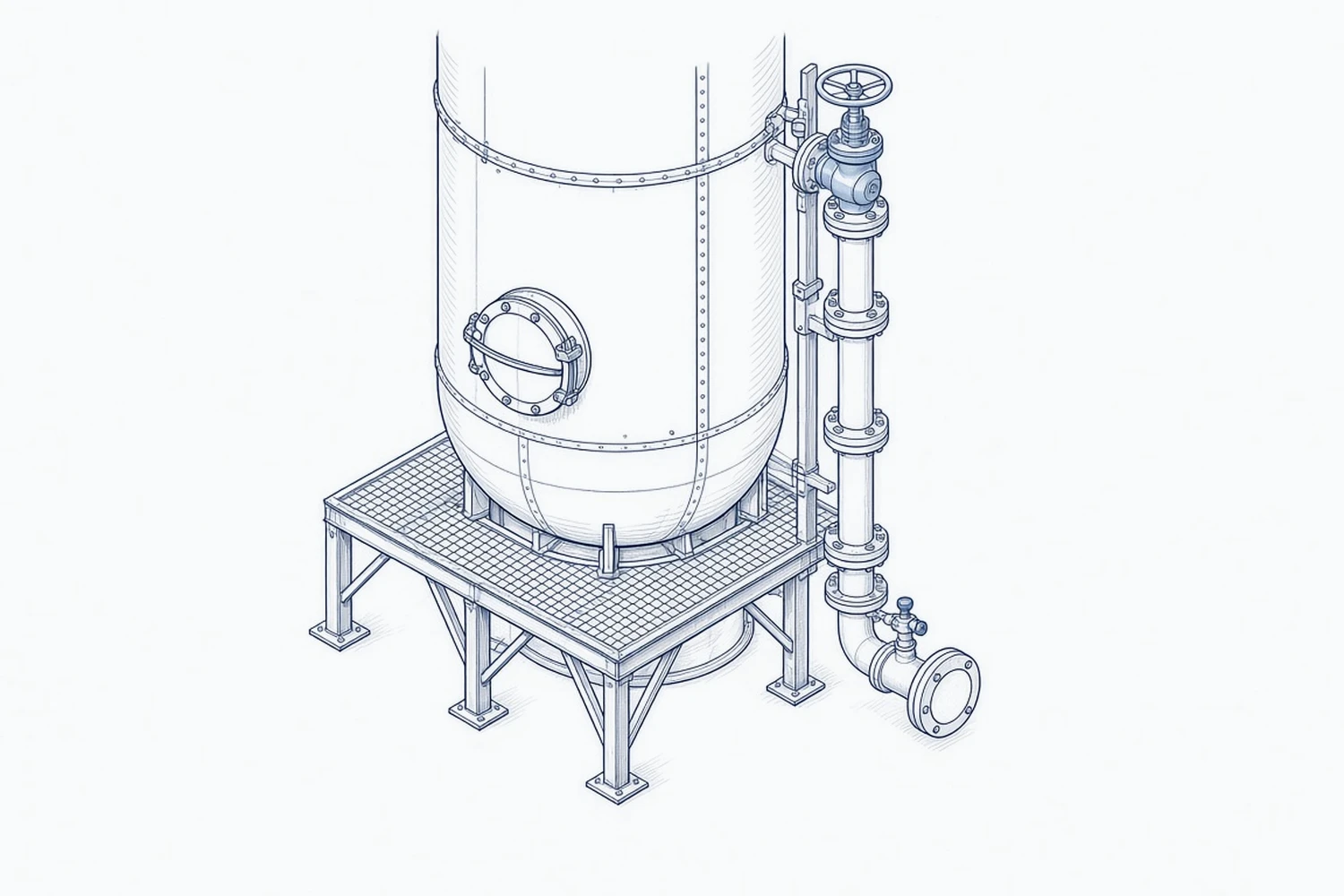
On 23 February 1999, maintenance workers at the Tosco Avon refinery in Martinez, California, were removing a corroded section of naphtha piping from the side of a 150-foot fractionator while the crude unit kept running. Everyone on the job knew the line still held liquid naphtha. Seven attempts to drain it over 13 days had failed, because the piping and its drain lines were plugged. The line was cut anyway. When a flange near the hot tower was opened to drain it, naphtha was released from the open end of the cut pipe and ignited. The US Chemical Safety and Hazard Investigation Board (CSB) records that four workers were killed and one was critically injured.
This post is a teardown of what the CSB investigation report found. It is not a lockout tagout explainer; that is covered in our Goodyear rupture disk teardown. The Tosco report is about a different gap: what a plant isolation procedure has to say when a line cannot be drained or isolated, who has to review that kind of nonroutine job, and when the answer is to shut the unit down.
Short answer: A plant isolation procedure sets out how equipment is separated from the process, emptied of hazardous material and checked before it is opened. At Tosco Avon, procedures required draining before opening, but plugging made that impossible, and nothing said what to do next. The CSB found the job was planned as low risk, without a hazard evaluation.
Applies to: Maintenance and service engineers, maintenance supervisors and permit issuers who open process piping or equipment, especially breakdown repairs on a running unit. The incident is a US refinery; the report quotes US and UK good practice guidance, not a rulebook for your plant. Last verified: 22 Nov 2026. Author: Muhammed Fahiz
What happened, in the order the CSB recorded it?
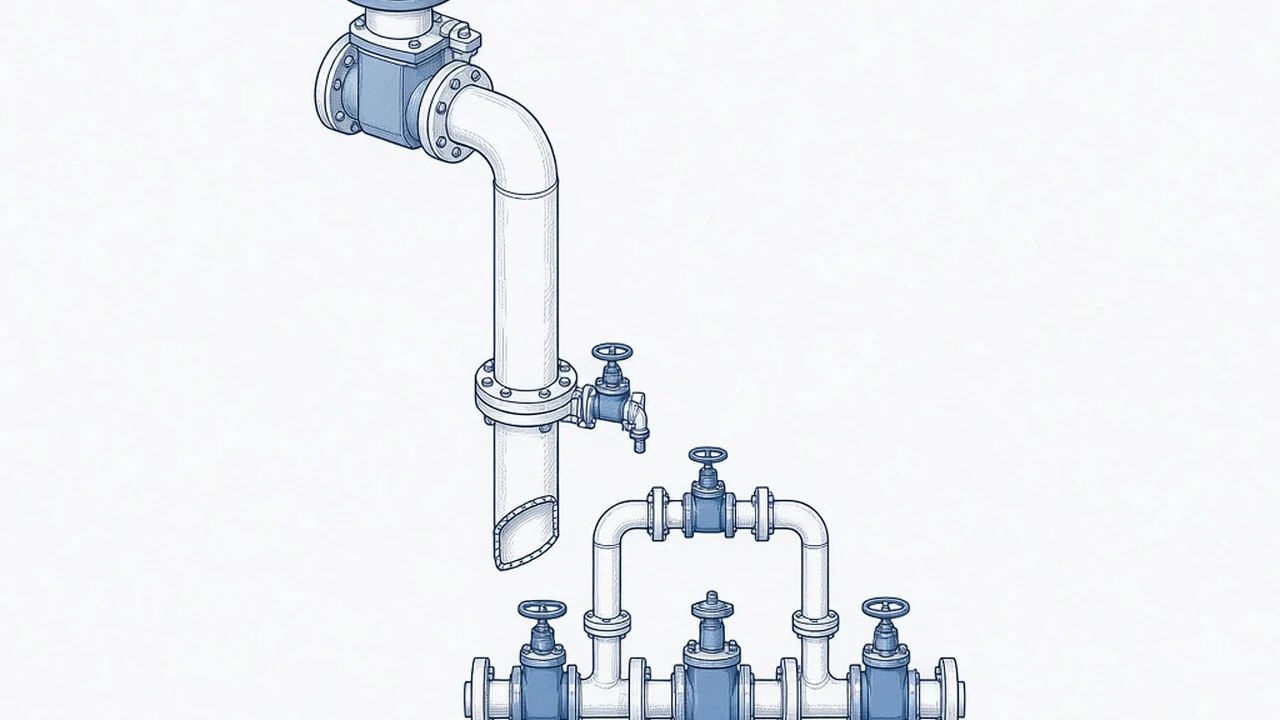
The crude unit drew naphtha from a tray near the top of the fractionator, at the 112-foot level, into 6-inch steel piping. The naphtha flowed down the side of the tower, through a level control valve and on to a naphtha stripper vessel (report pp. 9, 19). A bypass valve sat around the level control valve. The report labels the valves A to J; valves A, B, C and E are the ones it calls the isolation valves (p. 59). In plain terms:
- Valve A: the block valve on the draw line, at the fractionator.
- Valve B: the bypass valve around the level control valve.
- Valves C and E: block valves either side of the level control valve (valve D).
- Valves F and G: small drain valves either side of valve D.
The sequence below is taken only from the CSB report (No. 99-014-I-CA, March 2001): Section 2 and the Appendix A timeline. Times are as the report gives them.
| When (as the CSB recorded it) | What happened |
|---|---|
| 10 Feb 1999, 1:20 p.m. | A pinhole leak was found at the first elbow of the naphtha piping, just downstream of valve A, 112 feet above grade (pp. 9, 59). Responders decided to try to isolate the line "without shutting down the process unit" and closed valves A, B, C and E (p. 21). Insulation stripping started at 2:25 p.m. (p. 59). |
| After inspection | Ultrasound and X-ray showed much of the piping was severely corroded and thin. Technical staff recommended replacing the whole line from valve A to the stripper (p. 23). Over the 13 days to the fire, 15 work permits were written for the job (pp. 21, 23). |
| 10-14 Feb | On seven occasions the naphtha stripper filled to a high level and operators lowered it. On the last occasion they left the flow control valve to storage open, and it stayed open until the day of the fire (p. 23). |
| 13 and 17 Feb | The leak came back at the original pinhole and the piping was warm to the touch. Isolation valves A and B were retightened each time (p. 23). |
| 16-17 Feb | Drain attempts through valves F and G failed; the drain lines appeared plugged (p. 24). Operators proposed shutting down the unit to repair the piping (p. 36). The job scope was cut back to the section from the fractionator to the control valve (pp. 24, 60-61). |
| 18 Feb | Pipefitters tried to ream out the drain lines. The reaming device broke on the hard material in the line. The permit was marked "job not finished" (pp. 24, 62). |
| 19 Feb | A short spool piece downstream of the control valve was removed. It was plugged solid with a dark, tar-like substance. A blind flange with a drain valve (valve I) was fitted (p. 24). The block valves were not locked out, and the spool was not drained, nor was isolation verified, before removal (p. 62). Valve C was found jammed partway open, and "isolation was in doubt" (p. 26). |
| 22 Feb | No drain attempt was made, although the logbook said one would be. A hot work permit for cutting a deck stated that the piping was not drained, locked, or tagged (p. 26). The leak recurred (p. 23). A vacuum truck was arranged for the next day (p. 26). |
| 23 Feb, morning | The permit readiness sheet and the work permit both said draining was needed (p. 26). Drain attempts at valve I and at a flange upstream of the control valve produced nothing (pp. 63-64). The maintenance supervisor said a section of piping should be cut and removed with the crane; he tapped the pipe and said he believed the naphtha level was below the cut. The operator "responded that the naphtha should be removed before cutting the pipe" (pp. 26-27). |
| 23 Feb, 9:40 a.m. onward | "Before the line was drained or isolation was verified," the crew climbed the tower to cut the piping with a pneumatic saw (p. 64). After the first cut, a blind flange was bolted to valve A, and the open end of the remaining pipe faced the fractionator (pp. 27-28). A second cut, lower down, began to leak a small amount of liquid and was stopped (p. 28). A third drain attempt failed (p. 64). |
| 23 Feb, 11:45 a.m. to 12:18 p.m. | After lunch, draining started at a flange at the base of the vertical run (flange 2), within 3 feet of the fractionator, into an open plastic pan with plastic sheeting to direct the flow; the naphtha was suctioned to the vacuum truck (pp. 28, 65). At about 12:18 p.m. naphtha was suddenly released from the open end of the cut pipe and ignited (p. 28). |
The CSB explains the release this way (p. 28). The people doing the work "did not take into account that the naphtha piping was pressurized from the running process unit due to a severe leak through a badly corroded valve (valve B)." In the U-shaped piping, the column of liquid acted as a seal and held that pressure back. Once enough naphtha had drained from flange 2, the pressure leaking through the corroded valve overcame the reduced liquid head and pushed the naphtha out of the open end. The report says it ignited most likely from the hot fractionator surfaces (p. 10): the naphtha data sheet gave its autoignition temperature as 450 degrees F, and the lower half of the fractionator runs at 500 to 650 degrees F (p. 29). A later metallurgical test found that bypass valve B, when closed, leaked at a rate equivalent to a 1.5-inch-diameter hole (p. 50).
The Executive Summary puts the starting condition plainly: on the day of the incident the piping "contained approximately 90 gallons of naphtha, which was being pressurized from the running process unit through a leaking isolation valve" (p. 10).
Why was this "nonroutine" maintenance, and why does that matter?
The CSB report uses the Center for Chemical Process Safety (CCPS) definition: nonroutine work is "unscheduled maintenance work that necessitates immediate repair and may introduce additional hazards" (p. 10, footnote 7). It calls the 10 February leak an example of breakdown maintenance. Section 3.1 lists what counts as hazardous nonroutine maintenance in process plants: "hot work, hot tap, and work on live flare headers as well as line breaking when isolation and drainage cannot be ensured" (p. 31). Line breaking, the report explains elsewhere, means equipment opening (p. 12, footnote 10).
That last item is the Tosco job. The pipe was not just being replaced. It was being opened while it could not be drained and could not be proven isolated, on a unit that stayed in operation. The report adds that because nonroutine maintenance is unscheduled, it may present special hazards, and one of them with breakdown maintenance is "limitations on job planning" (p. 31).
At Tosco Avon, the planning step was mostly skipped. Job planning there normally involved a site visit and a discussion between the maintenance lead planner, the maintenance supervisor and the operations supervisor. The CSB says "this planning activity did not occur for the naphtha repair work" (p. 32). No job-specific instructions were prepared. The planning documents did not include the naphtha data sheet, a blind list (the document that says where blinds go to secure isolation), or the piping and instrumentation diagram showing where blinds were to be inserted (p. 32).
And the job kept its original label. "Tosco classified the naphtha piping repair as low risk, routine maintenance" (p. 34). The CSB's key finding is that, despite the inability to drain and isolate the line being known to supervisors and workers in the week before the fire, "the low risk classification was not reevaluated, nor did management formulate a plan to control the known hazards" (p. 11).
What is a plant isolation procedure?
The report does not use the phrase "plant isolation procedure", so here is the plain meaning as we use it in this post: the written steps a plant uses to separate a piece of equipment from the live process and its energy sources, remove the hazardous contents, and confirm the isolation holds before anyone opens it. Lockout and tagout of the isolating devices are part of it. Draining, depressuring, purging, blinding and checking that the isolation is holding are the other parts.
The report states two of those parts as requirements. In its section on the inability to drain: "Draining equipment to remove hazardous material and verifying isolation of the line are essential safety requirements prior to maintenance" (p. 35). It then quotes the UK Health and Safety Executive's guidance, The Safe Isolation of Plants and Equipment: "Bleeds and vents allow the safe depressurization of parts of the plant when it has been isolated and also enable the integrity of isolations to be checked" (p. 35, footnote 23).
Tosco's own procedure already covered the basics. The safe work procedure that governed permits said the operator must ensure that equipment is "depressured, drained, flushed, and purged of chemicals as completely as possible" before it is opened (p. 45). The key findings say the same in shorter form: Tosco procedures "required piping to be drained, depressured, and flushed prior to opening" (p. 11).
So the written procedure existed. The gap the CSB found was what happened when its first condition could not be met.
What has to be done before opening process equipment for maintenance?
The CSB report gives the answer in pieces, across its findings, its good practice section and its recommendations. Put together, in the report's own terms:
- Drain the hazardous material and verify the isolation. These are "essential safety requirements prior to maintenance" (p. 35). The report also notes that a lack of a high point vent downstream of valve A would have made the piping hard to purge, and that purging also reveals plugging that can trap pressurized liquid (p. 34, footnote 21).
- Do not cut or open a line that still holds flammable liquid. "Good practice guidelines for process plants recommend that flanges not be opened or lines cut prior to draining flammable liquids" (p. 48). Draining should go to a closed system that shields the liquid from ignition sources (p. 48). The report calls draining through a flange in a running unit with nearby ignition sources unsafe, because the rate and direction of flow cannot be adequately controlled and it may be hard to stop quickly (p. 48).
- Identify the specific hazards on the permit. Tosco's procedures and safe work permit "did not identify ignition sources as a potential hazard," and the permit did not identify the benzene in the naphtha (p. 11). Hot surfaces were as close as 3 feet from the work (p. 10). The use of a vacuum truck and a pneumatic saw was not included in the permit either, as Tosco procedures required (p. 42).
- Know what to do if a precondition cannot be met. "The procedures did not specify an alternative course of action if safety preconditions, such as draining, could not be met" (p. 11). That point gets its own section below.
- Authorize the work at the right level, before the day. On the day, the permit for this hazardous nonroutine work "was authorized solely by a unit operator" (p. 11). Operations supervisors were not involved in inspecting the job site or reviewing the permit (p. 12).
The report also says hazards are best caught before the job starts: "Good practice guidelines emphasize that hazards are most effectively recognized and evaluated in the calm atmosphere of the job planning process rather than during the often stressful environment of job execution" (p. 33).
What should happen when a line cannot be drained or isolated?
This is the core of the report for anyone who opens process equipment. Tosco's procedure said drain first. Plugging made draining impossible. The CSB found that "Tosco's permit system and procedures did not provide direction on what course of action to take if a line could not be drained" (p. 46).
The permit itself made the gap worse. The permit issued on the day listed draining and removal together. The CSB writes: "By listing draining and removal together, the permit allowed both activities to be authorized even though draining was required before removal of the piping" (p. 45). Tosco's procedures did not restrict a permit to one job (p. 45, footnote 39).
The report cites good practice that says what should happen instead. "If the hazards require variation from the normal level of isolation, the work should be stopped and a hazard evaluation conducted by an appropriate level within management" (p. 46, citing HSE, 1997). It lists the situations that should trigger a hazard review of maintenance work (p. 38), including:
- "Circumstances where existing procedures cannot be followed or where there are no applicable procedures."
- "Situations where safety preconditions cannot be met, such as controlling ignition sources where flammables may be present."
And it lists what that hazard evaluation should cover (p. 38): the specific hazards the work introduces; "Potential problems in achieving adequate isolation, such as depressuring, draining, and purging"; additional precautions such as more frequent monitoring of the isolation, better supervision or contingency plans; and whether the work can safely be done with the unit running, or should be postponed.
For this job, the CSB's conclusion was that the unit should have come down. "Once supervisors and workers knew that the line could not be drained or isolated, the unit needed to be shut down to safely conduct the repair" (p. 39). The report is careful about that point. It says the CSB "recognizes that the shutdown and startup of an oil refinery process unit can introduce its own risks," but that safe maintenance requires a shutdown "when serious hazards cannot otherwise be controlled or when the work cannot be deferred" (p. 39). Here, the hot surfaces could only be removed as a hazard by cooling the equipment, which meant shutting down, and the piping needed immediate replacement, so the work could not be deferred (p. 40).
The CSB compares the case with a 1987 incident at BP's Grangemouth refinery in Scotland, where four workers were killed after opening piping thought to be isolated and depressured; plugging and valve leakage had prevented complete isolation (p. 39). The report also notes that the 1989 Phillips Houston fire involved improper isolation of piping and the failure of a valve during hazardous nonroutine maintenance in a running unit (p. 31).
What did the CSB find about management oversight of the job?
The report's root causes are about the management system, not the people on the tower. The first root cause reads: "Tosco Avon refinery's maintenance management system did not recognize or control serious hazards posed by performing nonroutine repair work while the crude processing unit remained in operation" (p. 53).
Under that, the CSB lists (pp. 13, 53):
- Management did not recognize the hazards from ignition sources, valve leakage, line plugging and the inability to drain, and did not do a hazard evaluation of the repair at the planning stage.
- There was no planning and authorization process to make sure the job got appropriate management and safety review and approval.
- Supervisory and safety personnel did not keep a sufficient presence in the unit while the job was done.
- The procedures and permit program did not require ignition sources to be controlled before opening equipment that might contain flammables, and did not say what to do when requirements such as draining could not be met.
Who saw the warning signs. The report documents that the problems were known and written down. On 17 February two operators told the operations supervisor and a maintenance supervisor that more than one isolation valve was potentially leaking (p. 35). The stripper level rising was recorded in a shift supervisor log that other supervisors typically read (p. 35). The drain-line plugging was in the operator logbook (pp. 36, 61). Permit readiness sheets were available to management on an electronic bulletin board (p. 36). The two permits to drain the piping on 18 and 19 February were closed out as "job not finished" (p. 36). An operations process engineer who visited on the morning of the fire knew naphtha was still in the piping and suspected an isolation valve was leaking (pp. 35-36, 63).
Who was on site. The operations supervisor responsible for coordinating maintenance was not at work on 23 February, and the person covering did not visit the unit before the fire (p. 41). The shift supervisor visited that morning but did not observe the piping work, review the permit, or ask about the status of the draining attempts (p. 41). No health and safety personnel visited the job site. The maintenance supervisor was the only management representative present during the repair (pp. 41-42).
Stop work authority was not a substitute. Workers said they felt pressure to finish because the unit was the only crude unit operating at the time, and the presence of the vacuum truck, crane and contractors added to it (p. 43). Tosco management said workers had authority to stop unsafe work. The CSB's answer is that stop work authority "is a less effective measure for incident prevention than good job preplanning" (p. 43). Its reasons: it is used during the job, when pressure is greater; it relies on one worker's assertiveness, sometimes against a supervisor's direct instruction; and once contractors and equipment are standing by, the cost of idling them adds to the pressure (p. 43). In the root causes: "Tosco's reliance on individual workers to detect and stop unsafe work was an ineffective substitute for management oversight of hazardous work activities" (p. 53).
Audits. Neither Tosco Corporation nor Avon management had done documented audits of the refinery's line breaking, lockout/tagout or blinding procedures in the three years before the incident (pp. 12, 44). The audit program was undocumented observations that did not record findings or track corrective actions (p. 44). The CSB lists the pattern of deviations that audits did not catch, including "Opening of piping containing flammable liquids prior to draining" and "Inconsistent use of blind lists" (p. 44). It also describes opening equipment containing flammables before draining as a historical practice at the refinery when drain lines were plugged or unavailable, and says supervisors and workers "did not perceive that this departure from Tosco procedures was a serious hazard" (p. 47).
The CSB's view of the counterfactual is stated directly: "If a multidisciplinary team and senior management had participated in evaluating hazards and determining whether to shut down the process unit to safely conduct the repair, it is likely that the job would not have been allowed to proceed and the incident would not have occurred" (p. 41).
What did the CSB recommend?
The report's recommendation to the refinery's new owner (Ultramar Diamond Shamrock, Golden Eagle Refinery, which bought the site in 2000; p. 18) is a program for the safe conduct of hazardous nonroutine maintenance. At a minimum it should require (p. 55):
- A written hazard evaluation by a multidisciplinary team, where feasible during job planning before the day the job is done.
- Higher levels of management review, approval and oversight for work authorizations on higher-hazard jobs.
- "A written decision-making protocol is used to determine when it is necessary to shut down a process unit to safely conduct repairs."
- Management and safety personnel at the job site often enough to ensure the work is done safely.
- Procedures and permits that "identify the specific hazards present and specify a course of action to be taken" if safety requirements such as controlling ignition sources, draining flammables and verifying isolation are not met.
- Periodic audits of the program, with written findings and corrective actions.
To Tosco Corporation, it recommended periodic audits that cover the safe conduct of hazardous nonroutine maintenance, management oversight and accountability, management of change and corrosion control, with written reports shared with the workforce and recommendations tracked (p. 55). Other recommendations cover management of change reviews for operating changes, including prolonged flow through manual bypass valves, and corrosion control (p. 56).
Why was the line plugged and the bypass valve leaking?
This is background, but it explains why the drain lines did not work and why isolation failed. The report found that accelerated corrosion in the naphtha piping was mainly caused by poor desalter performance letting excess water and corrosives into the fractionator (p. 48). In the year before the incident the desalter ran 40 percent beyond design capacity on heavier crude (p. 48). The naphtha stripper bypass valve had run partially open for at least 10 months, and the piping near the control valve and its drain valves eventually became totally plugged with corrosion deposits (p. 49). The CSB found the line plugged with iron oxide, ammonium chloride and sulfur compounds (p. 51). No management of change review was done for these operating changes (pp. 51-52).
For a maintenance engineer, the practical point is narrow: a drain valve that has sat on a fouled line for months may not drain anything, and a bypass valve that has run throttled for months may not seal when closed.
What can a maintenance engineer check before the next nonroutine job?
These checks come from what the CSB recorded and recommended. They are not a new procedure of ours, and they do not replace your plant's isolation and permit procedures.
- Has the line actually been drained, or only "attempted"? At Tosco, seven drain attempts failed and two drain permits were closed as "job not finished" (pp. 35-36). The day's permit still listed draining and removal together (p. 45).
- Is there evidence the isolation is holding? A recurring leak at the original point, a warm pipe and a downstream vessel that keeps filling were all recorded, and the CSB says the stripper filling and the leak recurrence "established that the isolation valves were leaking" (p. 35, footnote 22). A block valve with its stem protruding when fully tightened was read as jammed partway open (pp. 26, 34).
- Does the permit name the specific hazards? Ignition sources within 3 feet, benzene, open containers, the vacuum truck and the saw were missing from Tosco's permits (pp. 10-11, 42, 46).
- Does the procedure say what to do if draining or isolation cannot be achieved? If it does not, the CSB's cited good practice is to stop the work and have a hazard evaluation done at an appropriate level of management (p. 46).
- Has the job's risk classification been looked at again since the facts changed? Tosco's repair stayed "low risk" after the plugging and leaking valves were known (pp. 11, 34).
- Has someone with authority answered the shutdown question, in writing? The CSB recommends a written decision-making protocol for when a unit must be shut down to make repairs safely (p. 55).
- Is the history of the job written where the next shift can read it? At Tosco the warnings were spread across operator logbooks, shift supervisor area notes, permit readiness sheets and permit close-outs (pp. 35-36, 60-62). They were recorded, but no one put them together into a plan.
That last point is the same record-keeping problem a service engineer job card or an equipment repair log is meant to solve: what was tried, what failed, and what state the equipment was left in. For the lockout and tagout side of isolation, and for confirming a valve is reopened after a job, see the Goodyear teardown.
What this doesn't tell you
- The CSB is not an enforcement or regulatory body, and the report says so (p. 3). This post does not assign legal blame to any person. The report records that the maintenance supervisor disputed being present for the first cut, and that other witnesses and the timeline contradict him (p. 27, footnote 11); we have not gone further than that.
- The report describes one refinery in 1999, its procedures at the time and the good practice documents it cites (CCPS, HSE, API, Lees, Kletz). We have not opened those cited documents; their points are given as the CSB quoted or summarized them.
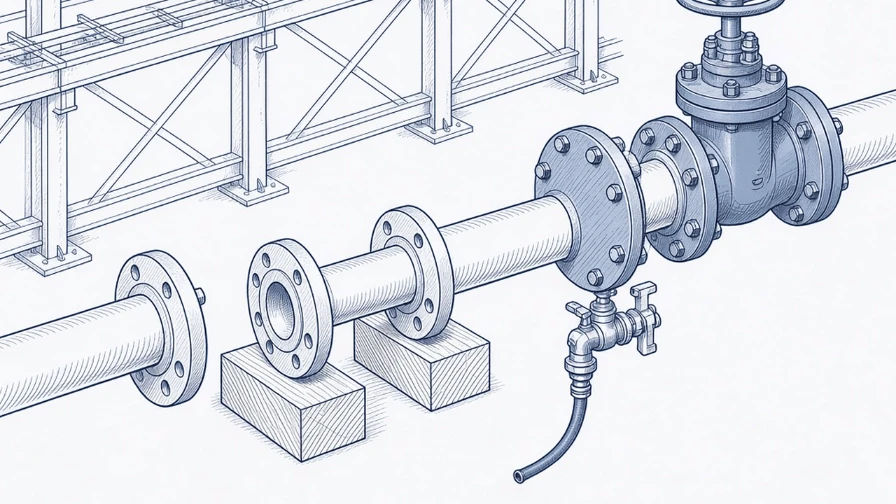
- The report's figures (simplified piping diagrams and photos) are not reproduced here. Valve letters follow the report's labels.
- The report also covers management of change, corrosion control and mechanical integrity in more depth than the short section above.
- "Plant isolation procedure" is our wording, not the report's. This post does not set out the isolation rules that apply in India or any other country. For a plant outside the US, use your own site's isolation and permit-to-work procedures.
- The search volume for "plant isolation procedure" is unverified. "Safe isolation of plant and equipment", the title of the HSE guidance the CSB quotes, is likely the stronger search term and is planned for a later post.
Where does HangerSearch fit?
At Tosco Avon, the warnings were written down: logbook entries about plugged drains, a supervisor's note about a filling stripper, two drain permits closed as "job not finished". What was missing was someone putting them together before the job. A record of what was tried on a piece of equipment, and what failed, is only useful if the next person can find it.
HangerSearch searches your team's finalized service reports where they already sit and cites the page each answer comes from. It does not issue permits or replace an isolation procedure. See how we handle your reports.
Book a 20-minute demo: hangersearch.com
FAQ
What is a plant isolation procedure? It is a plant's written method for separating equipment from the live process and its energy sources, removing hazardous contents, and confirming the isolation before the equipment is opened. That is our plain description, not a definition from the CSB report. The report states that draining equipment to remove hazardous material and verifying isolation of the line "are essential safety requirements prior to maintenance" (p. 35).
What has to be done before opening process equipment for maintenance? From the CSB's Tosco report: drain the hazardous material and verify the isolation (p. 35); do not open flanges or cut lines before flammable liquids are drained, and drain to a closed system (p. 48); identify the specific hazards, including ignition sources, on the permit (p. 11); and get authorization at a level that matches the hazard (pp. 11-12, 55). If any of those cannot be done, the procedure should say what happens next (p. 46).
What happened at the Tosco Avon refinery on 23 February 1999? Workers were removing corroded naphtha piping from a fractionator while the crude unit was running. The line could not be drained because of plugging and was being pressurized through a leaking isolation valve. After the pipe was cut and a flange near the tower was opened to drain it, naphtha was released from the open end and ignited on the hot fractionator. Four workers were killed and one was critically injured (pp. 3, 9-10, 28).
Why couldn't the naphtha line be drained? The piping and its drain lines were plugged with corrosion products. Drain attempts failed seven times; a reaming tool broke on the hardened material; a removed spool piece was plugged solid (pp. 24, 35-36, 51).
What is hazardous nonroutine maintenance? The report uses the CCPS definition of nonroutine work: unscheduled maintenance work that needs immediate repair and may introduce additional hazards (p. 10, footnote 7). It lists hazardous nonroutine maintenance as including hot work, hot tap, work on live flare headers, and line breaking when isolation and drainage cannot be ensured (p. 31).
Should the unit have been shut down? The CSB says yes for this job: once it was known that the line could not be drained or isolated, the unit needed to be shut down to do the repair safely. It also recognizes that shutdown and startup carry their own risks, and recommends a written decision-making protocol for when a shutdown is necessary (pp. 39, 55).
Is this post about lockout tagout? Only in passing. The CSB found no documented audits of lockout/tagout, line breaking or blinding in the three years before the incident (p. 12), but the report's main issue is the control of hazardous nonroutine maintenance. Lockout tagout steps are covered in our Goodyear post.
Sources
- US Chemical Safety and Hazard Investigation Board (CSB), Investigation Report, Refinery Fire Incident (4 Dead, 1 Critically Injured), Tosco Avon Refinery, Martinez, California, February 23, 1999, Report No. 99-014-I-CA, issued March 2001: https://www.csb.gov/assets/1/20/tosco_final_report.pdf. PDF downloaded and read in full on 22 Nov 2026 (72 PDF pages). Page numbers in this post are the report's printed page numbers. Supports: the system description and valve labels; the sequence of events (Section 2 and Appendix A); the release mechanism and autoignition temperatures; the nonroutine maintenance definition and list; job planning, hazard identification, unit shutdown, oversight, stop work, audit and permit findings; the good practice points the CSB cites; root causes; recommendations; and the corrosion background.
Related
- A rupture disk was replaced, the isolation valve stayed closed: what the Goodyear case study recorded
- Service engineer job card format (with a filled example)
- Equipment repair log template that stays searchable
- "It's running now" is not a fix: leave a trail the next tech can find
- How HangerSearch handles your data